543
The election of a new pope is one of the most secretive and consequential processes in the world, shaping the future of over 1.3 billion Catholics. Pope Francis who died after easter message, the first Jesuit pope and a transformative figure, has pushed for reform, social justice, and inclusivity—but also faced resistance from traditionalists. As his papacy enters its twilight years (he is 87 as of 2024), speculation grows: Who will succeed him?
This in-depth exploration examines:
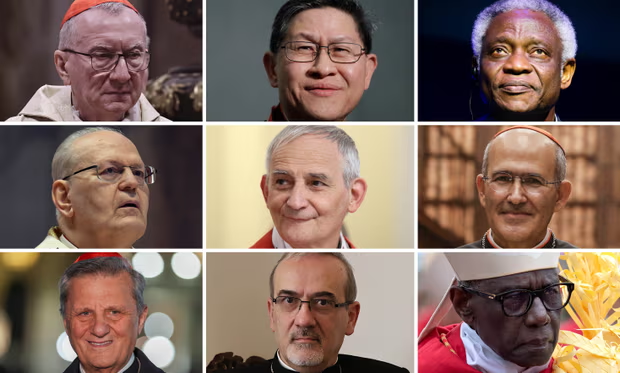
1. The Leading Candidates
- Cardinal Pietro Parolin (Italy) – The Vatican’s Secretary of State and a skilled diplomat, seen as a continuity candidate who could balance reform and tradition.
- Cardinal Christoph Schönborn (Austria) – A moderate reformist and theologian, respected for his pastoral approach.
- Cardinal Luis Antonio Tagle (Philippines) – A charismatic Asian candidate who could shift the Church’s focus toward the Global South.
- Cardinal Robert Sarah (Guinea) – A staunch traditionalist favored by conservatives, advocating a return to doctrinal orthodoxy.
- Cardinal Matteo Zuppi (Italy) – A rising star known for mediation skills, potentially a bridge-builder between factions.
- Cardinal Peter Turkson (Ghana) – A strong African contender with expertise in social justice and environmental issues.
2. Key Factors Influencing the Election
- Geopolitics: Will the next pope come from Europe, Africa, or Latin America, reflecting the Church’s shifting demographics?
- Ideology: Will the cardinals choose a progressive reformist, a conservative traditionalist, or a pragmatic centrist?
- Age: After an elderly pope (Francis was 76 at election), will they opt for a younger leader for a longer papacy?
- Scandals & Reforms: How will ongoing issues like financial transparency, clerical abuse, and Vatican infighting shape the vote?
3. Historical Precedents & Predictions
- Past conclaves have surprised the world (e.g., Francis’ election in 2013). Could another “dark horse” emerge?
- The growing influence of African and Latin American cardinals, who now hold significant voting power.
- The possibility of a short-term “transitional pope” before a more decisive leader is chosen.
4. What the Next Papacy Could Mean for the Church
- If a reformist wins: Further decentralization, openness to LGBTQ+ outreach, and climate action.
- If a conservative wins: A return to doctrinal rigidity, Latin Mass revival, and resistance to liberalizing trends.
- If a Global South pope is elected: A stronger focus on poverty, migration, and interfaith dialogue.