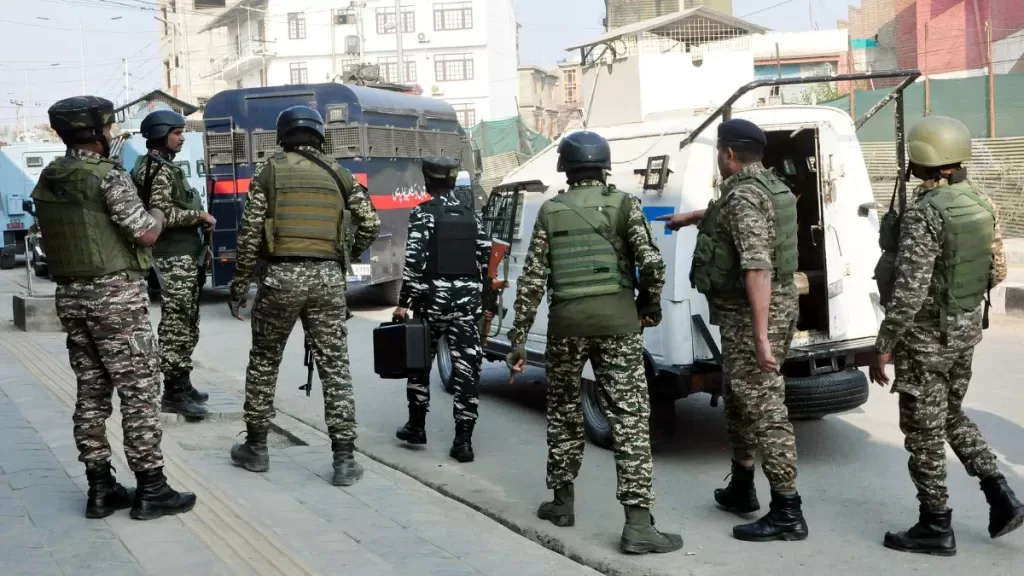
In the aftermath of India’s Operation Sindoor — which targeted terror infrastructure in Pakistan-occupied Kashmir — Pakistan has initiated a broad military, intelligence, and diplomatic mobilization. Aimed at showcasing readiness and deterring further Indian strikes, Pakistan’s actions are being closely monitored by global and regional actors.
🚨 Heightened Military Alert Across the LoC and IB
The Pakistan Army has significantly increased vigilance along the Line of Control (LoC) and International Border (IB):
- Deployment of additional troops in sectors facing Poonch, Rajouri, and Kupwara
- Enhanced patrolling and surveillance using thermal imaging and night vision equipment
- Repositioning of heavy artillery and anti-aircraft batteries
- Digging of new trenches and fortification of posts along forward positions
Military sources indicate that troops in Muzaffarabad, Kotli, and Bhimber sectors have been placed on “combat standby” status.
🛩️ PAF (Pakistan Air Force) on High Operational Readiness
In anticipation of any escalation, the Pakistan Air Force (PAF) has activated key bases near the Indian border:
- Combat jets including JF-17 Thunder and F-16s placed on Quick Reaction Alert (QRA)
- Continuous Combat Air Patrols (CAPs) over PoK and sensitive areas
- Radar surveillance systems and early warning radars on 24-hour operation
- Reinforcement of air defense units across Punjab and Azad Jammu & Kashmir (AJK)
PAF aircraft have also been observed conducting night-time training sorties in the region.
🕵️♂️ ISI Coordination and Intelligence Surveillance
The Inter-Services Intelligence (ISI) has ramped up internal and cross-border intelligence activities:
- Surveillance of Indian troop build-up and air activity using SIGINT and HUMINT assets
- Increased coordination with jihadi proxy groups in Kashmir and Punjab
- Monitoring of communication networks in border regions
- Alert status raised for operatives and sleeper cells inside India
There are reports of joint meetings between ISI, military command, and leaders of proxy outfits to plan retaliatory strategies.
🔥 Pakistan Troops Open Fire Along LoC Using Advanced Weaponry
In a clear signal of escalation, Pakistan Army units have initiated cross-border firing along multiple sectors of the Line of Control (LoC), particularly in Rajouri, Poonch, and Uri. These ceasefire violations are reportedly more intense and frequent since the execution of India’s Operation Sindoor.
Key developments:
- Use of modern weaponry: Pakistan troops are reportedly employing U.S.-origin M4 carbines, Chinese QBU-88 sniper rifles, and 120mm heavy mortars in targeted firing.
- Night-time engagements: Ceasefire violations are increasingly taking place after dusk, with laser-guided ammunition and long-range sniper fire targeting Indian forward posts.
- Targeting of civilian zones: Shelling has also been reported in civilian belts like Balakote and Mendhar, leading to the activation of Indian community bunkers.
- Multiple sectors involved: LoC sectors in Tangdhar, Keran, and Nowshera have seen sustained fire over the past 48 hours, according to Indian Army reports.
Indian forces have responded in kind, and local commanders on both sides are reportedly under instructions to maintain combat readiness. Military sources suggest that this could be Pakistan’s attempt to create tactical pressure while calibrating its broader response.
🧱 Civil Defense and Bunker Readiness in Border Areas
Civilians in Pakistani border villages are being prepared for possible escalation:
- Construction and inspection of community bunkers in districts like Kotli, Mirpur, and Bhimber
- Emergency services activated in border hospitals and schools
- Distribution of ration kits and first-aid supplies to families in vulnerable zones
- Coordination between local police and civil administration to manage evacuations
Government broadcasts and mobile alerts have been used to advise civilians on staying indoors and following safety protocols.
🏫 School Closures and Civilian Protection Measures
Pakistan has implemented the following steps to safeguard civilians, especially children, in high-risk zones:
- Closure of schools within 5 km of the LoC in AJK
- Setup of emergency classrooms in safer interior locations
- Suspension of school transport in affected areas
- Counseling support in schools for stress and trauma management
📡 Media Messaging and Psychological Operations
The Pakistani government and military have launched a multi-platform communication effort:
- Controlled media messaging emphasizing Pakistan’s “right to defend”
- Broadcasts of nationalistic songs and military drills on state TV
- Counter-narratives challenging India’s justification for Operation Sindoor
- Use of social media accounts linked to ISPR (Inter-Services Public Relations) to shape domestic opinion
🌐 Diplomatic Protests and Global Outreach
Pakistan has lodged formal protests and briefed foreign envoys:
- Summoning of Indian envoy to protest airspace violations and condemn Operation Sindoor
- Letters sent to the UN Secretary-General and OIC (Organisation of Islamic Cooperation)
- Bilateral discussions initiated with allies like China, Turkey, and Saudi Arabia
- Outreach to Western nations emphasizing regional stability and the need for international mediation
🧨 Proxy Groups and Retaliation Scenarios
Pakistan-based proxy groups have issued veiled threats of reprisal:
- Lashkar-e-Taiba (LeT), Jaish-e-Mohammed (JeM), and Hizbul Mujahideen seen increasing online activity
- Intelligence inputs suggest renewed infiltration attempts along the LoC
- Potential threats to Indian diplomatic missions and infrastructure abroad
India’s agencies are already monitoring chatter indicating a possible hybrid warfare response.
💻 Cyber Warfare Preparedness
Pakistan’s cyber defense and offense units, including those under Inter-Services Cyber Command, have been put on alert:
- Cyber drills and simulations conducted targeting communication grids
- Monitoring Indian digital assets and infrastructure
- Defense of critical websites, including those of the military and government
- Social media influence campaigns underway to shape public perception
🧭 Strategic Posturing: A Calculated Yet Aggressive Stance
While Pakistan seeks to avoid a full-scale conflict, its preparations suggest readiness for a limited tactical retaliation:
- Increased alert on missile units near the border
- Naval readiness in the Arabian Sea on the rise
- Regular high-level briefings held between the military and political leadership
Analysts suggest Pakistan may attempt to project strength while avoiding escalation that could provoke international backlash.
🕊️ Conclusion: Pakistan on High Alert, Tensions Escalate
As Operation Sindoor reshapes South Asian security dynamics, Pakistan’s military, intelligence, and diplomatic moves reflect a nation preparing for both deterrence and response. While open war remains unlikely, the possibility of a tit-for-tat response — through proxy action, border skirmishes, or cyber intrusions — keeps the region on edge.